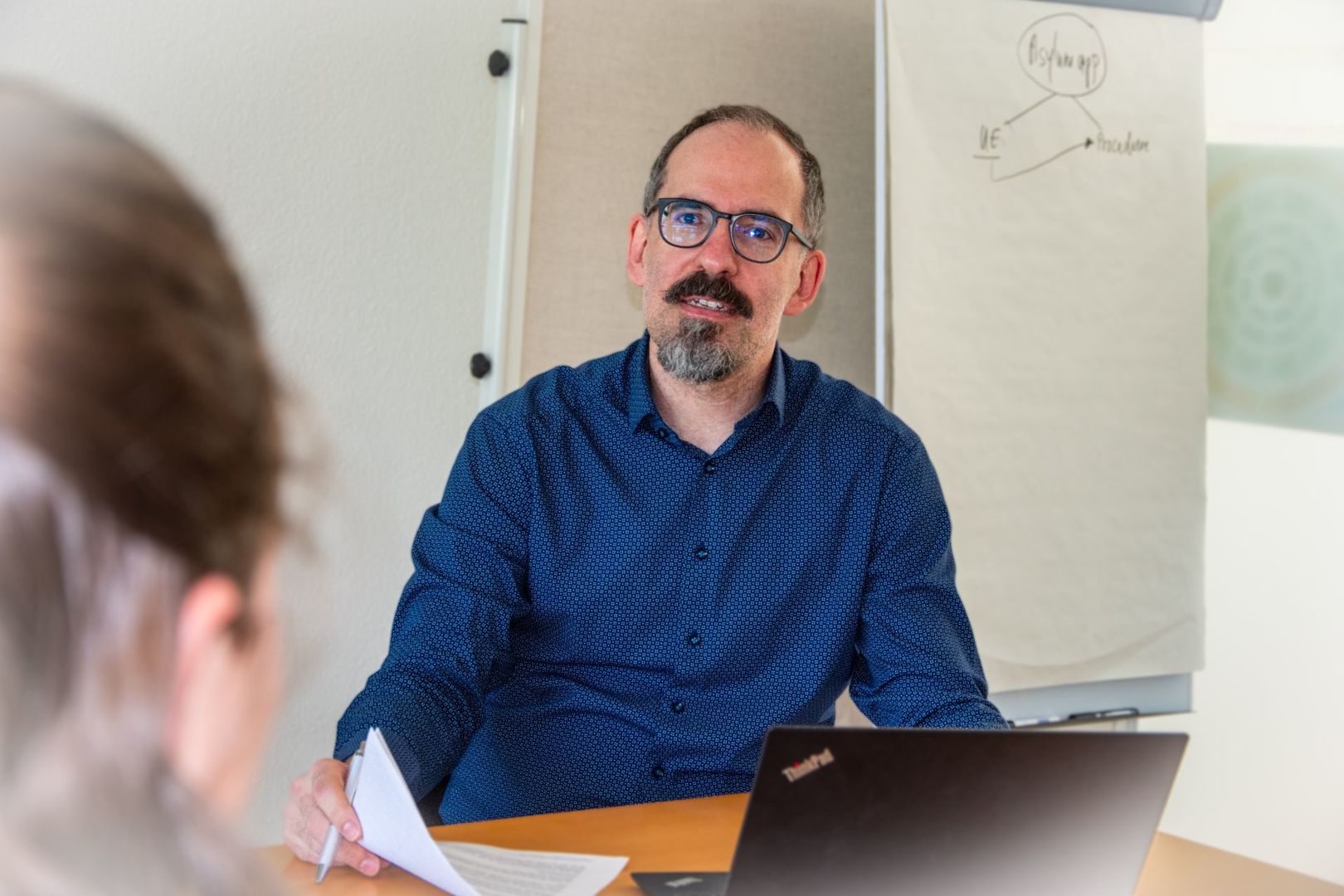
Human rights do not end at the border
- Christian, what is the EU Migration and Asylum Pact all about?
The EU Migration and Asylum Pact is a major reform package that EU member states adopted in May 2024. Its goal is to make the handling of refugees and migrants in Europe fairer, more consistent, and more efficient. The Pact has also been in effect in Liechtenstein since June 12, 2026—at the same time as in all other EU and Schengen countries.
Specifically, it addresses, among other things, how people are screened at Europe’s external borders, how asylum procedures are conducted, which country is responsible for which case, and how responsibility can be shared in a spirit of solidarity among multiple parties.
- What role does Liechtenstein play in this?
Liechtenstein is not an EU member, but it is one of the so-called Schengen and Dublin states. This means that Liechtenstein has adopted certain European rules on freedom of movement and asylum procedures and must therefore implement parts of the new pact.
Liechtenstein is directly affected by five areas of the pact: the rules for screening arriving individuals, the European fingerprint and data system, the provisions for allocating responsibility for asylum procedures, the crisis provisions for exceptional situations, and parts of the return rules.
What does not apply to Liechtenstein: Since the country has no EU external borders, no border procedures are carried out here. And while Liechtenstein can participate in the voluntary solidarity mechanism—through which countries can help alleviate the burden on other nations by taking in refugees or making financial contributions—it is not required to do so.
- The VMR is now taking on the role of an independent monitoring body. What does that mean in practice?
The Liechtenstein Human Rights Association (VMR) is to serve as an independent body to monitor whether human rights are respected during the screening of migrants.
Specifically, this means: The VMR will ensure that people have access to a fair asylum process, that no one is returned to a country where they face danger (the so-called principle of non-refoulement), that special consideration is given to the best interests of children, and that the rules governing the housing and any detention of individuals are followed.
In addition, the VMR is responsible for ensuring that credible allegations of human rights violations are investigated promptly and thoroughly and for monitoring the progress of such investigations.
- Why is an independent body needed for this task?
Every Schengen state must designate an independent body to carry out this monitoring function. The key point here is that this body must oversee state authorities and therefore cannot itself be part of the state.
As a national human rights organization, the VMR meets these requirements. It is neither subordinate to nor dependent on the state, making it one of the few organizations in Liechtenstein suitable for this role.
- How will the VMR carry out this task in practice?
The VMR will conduct regular on-site inspections—some announced, some unannounced—to verify whether the rights of migrants are being respected. At the same time, it serves as a point of contact for affected individuals, who can reach out if they feel their rights have been violated.
The VMR documents its observations, drafts reports, and issues recommendations to both Liechtenstein authorities and at the international level. To this end, it maintains dialogue with other national and international organizations and engages in ongoing professional development.
- Who can people turn to if they feel their rights have been violated?
People who believe their rights have been violated during the review process can contact the VMR directly. The VMR is the competent independent body responsible for receiving such reports and—if the allegations are substantiated—ensuring that the matter is investigated.
- What happens if the VMR identifies irregularities?
The VMR documents every contact and every case in writing. Depending on the nature of the problem, it contacts the relevant authorities and ensures that a formal investigation is initiated in the event of serious allegations. The VMR actively monitors and oversees the progress of these investigations.
- Why is this new mandate important for Liechtenstein?
Like all other Schengen states, Liechtenstein has clearly committed itself to human rights, for example through the European Convention on Human Rights and other international agreements. With the VMR’s new mandate, this commitment takes on a concrete, verifiable form in the area of migration.
Precisely because Liechtenstein is a small country without an EU external border and the number of asylum seekers is comparatively low, one might think that such a mechanism is hardly necessary here. But the opposite is true: it is precisely in small countries, where many officials and decision-makers know one another personally and public scrutiny exerts less pressure, that an independent body is particularly valuable.
The independent monitoring mechanism provides clarity on what is legally and human-rights-wise correct. This protects not only the people affected but also the authorities themselves. After all, properly documented procedures provide legal certainty and shield against unjustified criticism. Furthermore, independent oversight strengthens public confidence in the rule of law and protects government agencies from political pressure to circumvent human rights in exceptional situations.
You can find more information on migration and asylum on our website here.