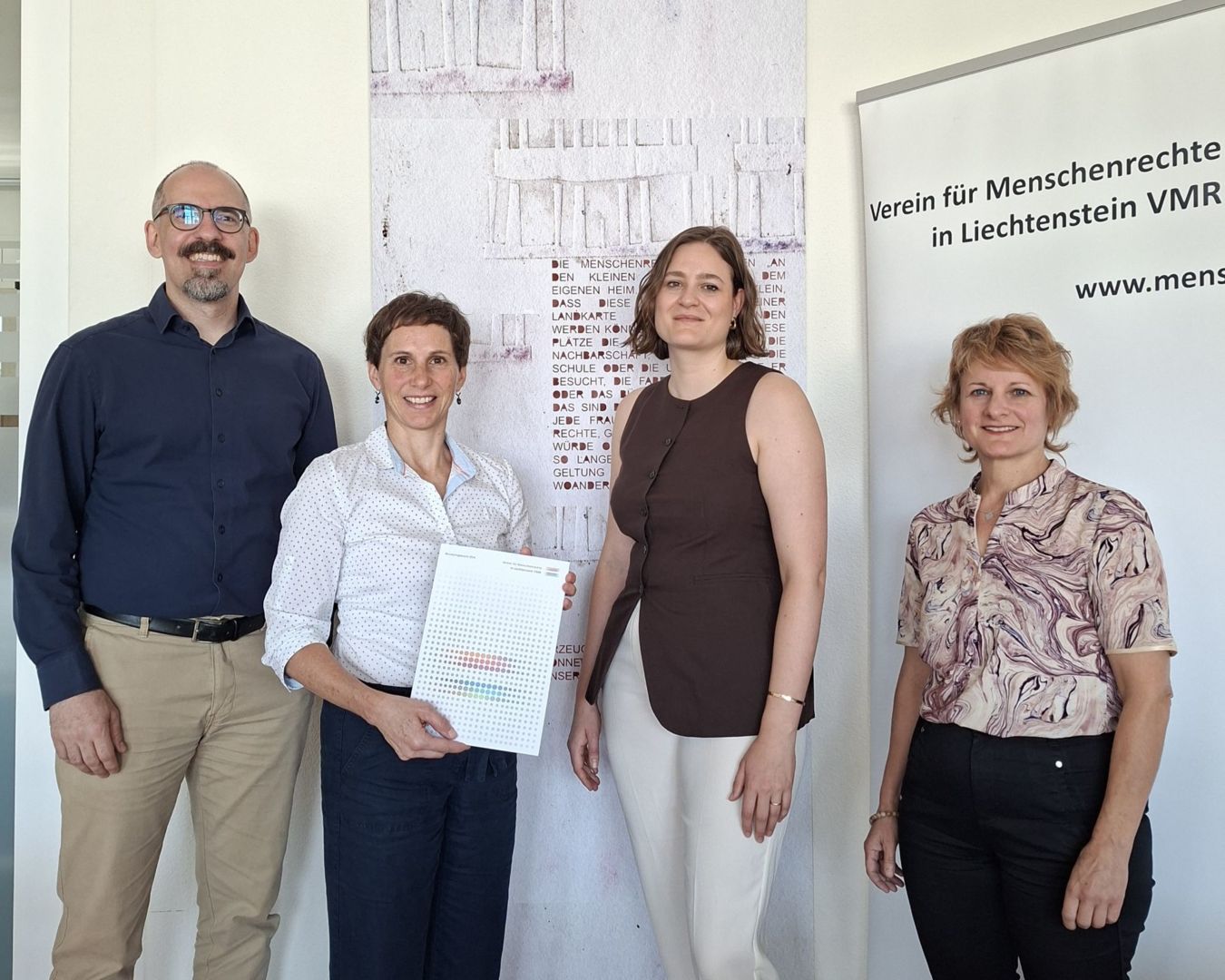
2025 Monitoring Report Published
In accordance with its statutory mandate, the VMR prepares an annual report on the human rights situation in Liechtenstein. The report is not intended to be exhaustive, but rather serves as a recurring document designed to foster discussion, promote improvements, and advance the cause of human rights in Liechtenstein.
Milestones in the Reporting Year
The year 2025 brought important changes for Liechtenstein. On January 1, 2025, marriage equality came into effect, thereby establishing legal equality for same-sex couples in matters of adoption, taxation, and inheritance. Also effective January 1, paid parental leave was introduced, granting each parent four months of leave starting in 2026, two of which are paid at 80% of their salary. On February 27, 2025, Liechtenstein also signed the Council of Europe’s AI Framework Convention, the world’s first legally binding international treaty on artificial intelligence, human rights, and democracy. Finally, the new Media Promotion Act came into force, aimed at strengthening media diversity and quality journalism.
58 Recommendations
At the same time, the VMR is making 58 recommendations to the government. They cover a broad range of topics: from the urgently needed anti-discrimination law to the protection of asylum seekers and the expansion of children’s rights, as well as the gender equality strategy, the rights of people with disabilities, and the protection of LGBTIQA+ individuals. In the area of human trafficking, the VMR calls for an action plan as well as better training for the police, the judiciary, and government agencies. Regarding detention, it demands, among other things, a medical examination within 24 hours of detention and separate housing for individuals in deportation detention. In the area of gender equality, the VMR calls for the decriminalization of abortion and for a national strategy to combat violence in accordance with the Istanbul Convention.
Human Rights as a Daily Task
VMR President Wilfried Marxer notes in the editorial: Human rights are not a given, but rather a battleground that must be fought anew every day. In Liechtenstein, too, international bodies—from the Council of Europe to UN committees—have repeatedly called for improvements. This is not a flaw, but rather the functioning of a system that demands accountability. Liechtenstein should take these reviews seriously. In this context, he quotes Volker Türk, the UN High Commissioner for Human Rights:
"Human rights are the most effective tool we have to give a voice to those who have no power, to tell the powerful the truth, and to ensure that they understand: Yes, power has its limits."
Download the full report as a digital version and as a PDF: