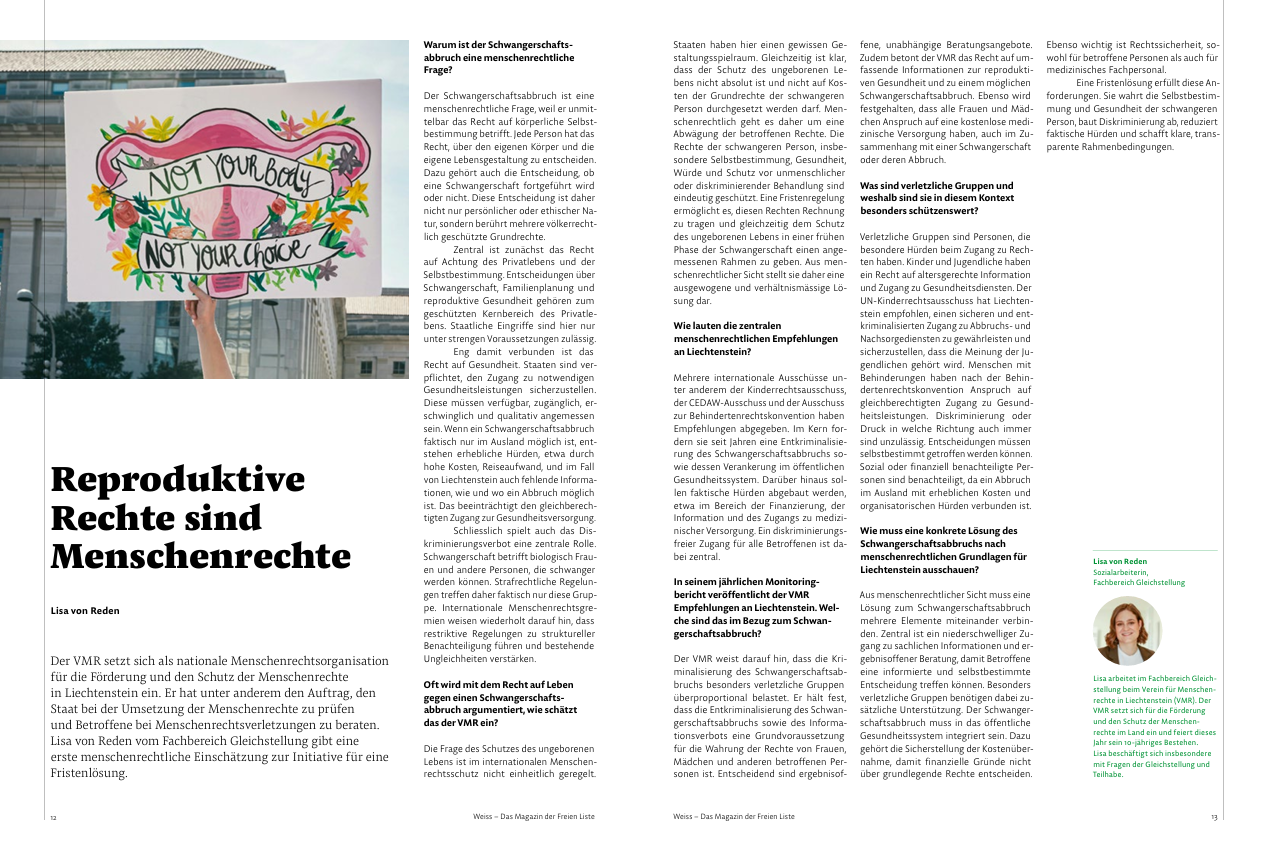
Abortion in Liechtenstein: A Human Rights Perspective
From a human rights perspective, the right to bodily autonomy, health, and equal treatment are central to the issue of abortion. Decisions regarding pregnancy, family planning, and reproductive health are considered part of protected private life. States are therefore required to ensure that access to medical care is structured in such a way that relevant services are available, accessible, and affordable.
The Association for Human Rights points out that the current legal situation presents several challenges. This creates additional organizational, financial, and legal hurdles. Those with limited financial resources or restricted access to information are particularly affected.
For this reason, several international human rights bodies have urged Liechtenstein in recent years to adopt the following recommendations:
• Decriminalize abortions,
• Ensure access to information and counseling, and
• to integrate reproductive health services more fully into the public health system.
From a human rights perspective, the central issue is whether those affected can make their decision in an informed, self-determined manner and without facing discriminatory barriers. The current initiative to introduce a time-limit solution revisits these questions and brings them back into the political discussion.
A time-limit regulation can help clarify the legal framework and create legal certainty. At the same time, it opens up the possibility of improving access to healthcare and protecting fundamental rights. This involves a careful balancing of the rights of the pregnant person against the protection of unborn life. A time-limit regulation represents a possible approach to accommodating these differing interests within a legal framework.
Read the full article in the current issue of Weiss magazine by the Freie Liste.